
The Thesis
Sovereign AI is next. Governance is the substrate that makes it real.
Two inversions are reshaping AI at the same time. The first is the trajectory the timeline below makes obvious: from cloud-centralized to operator-sovereign. The second is harder, and almost nobody is building for it: from ungoverned to substrate-governed. Netminder42 builds for both — because building for either alone is the same as not building either.
The First Inversion
Every era of computing followed the same arc.
From institutional control to individual ownership. AI is on this path right now — whether the cloud-AI incumbents like it or not.
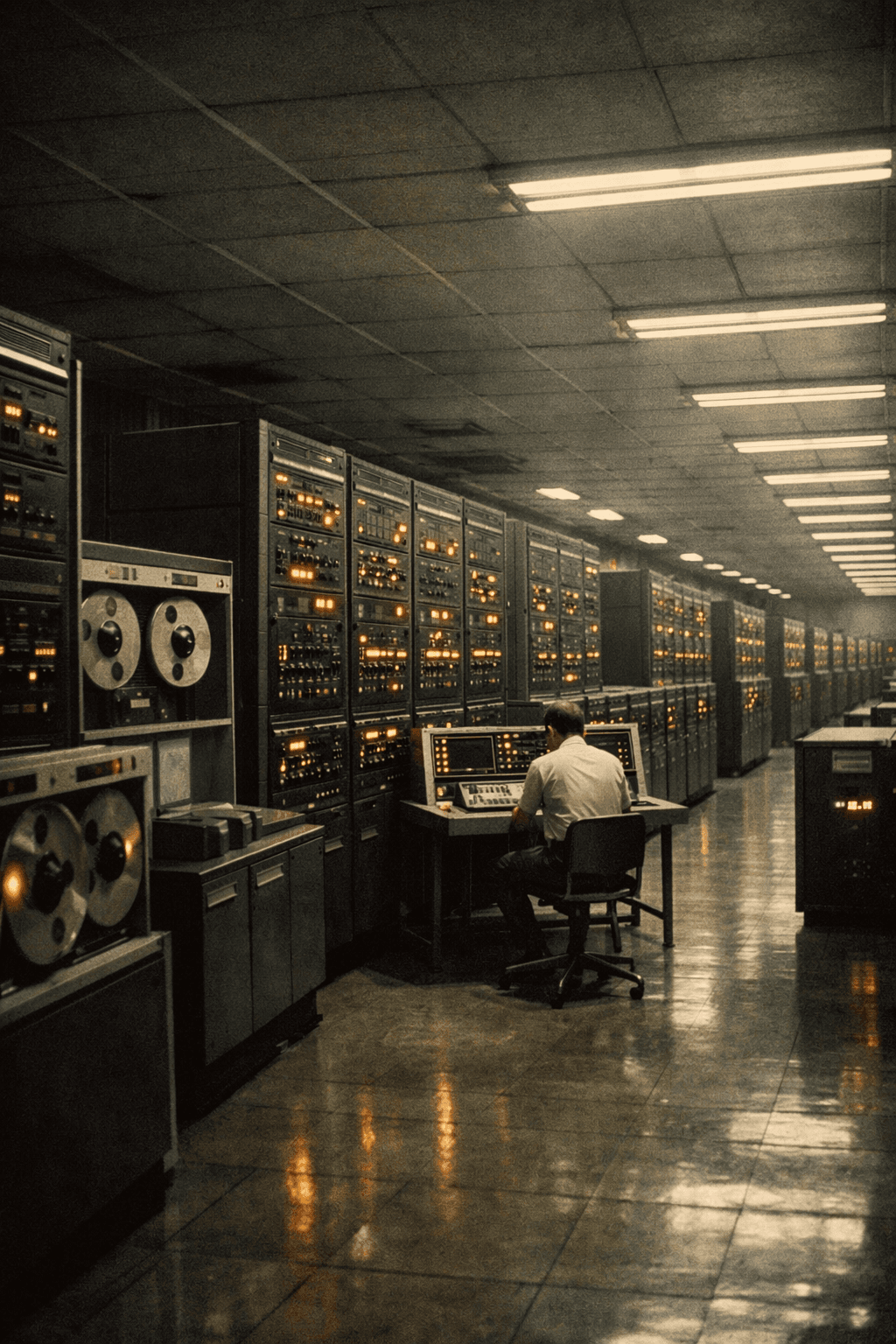
1960s
Mainframes
Computing began centralized. Massive machines owned by institutions. Users had no control, no ownership, no independence. You used what they gave you, on their terms.
1 / 6
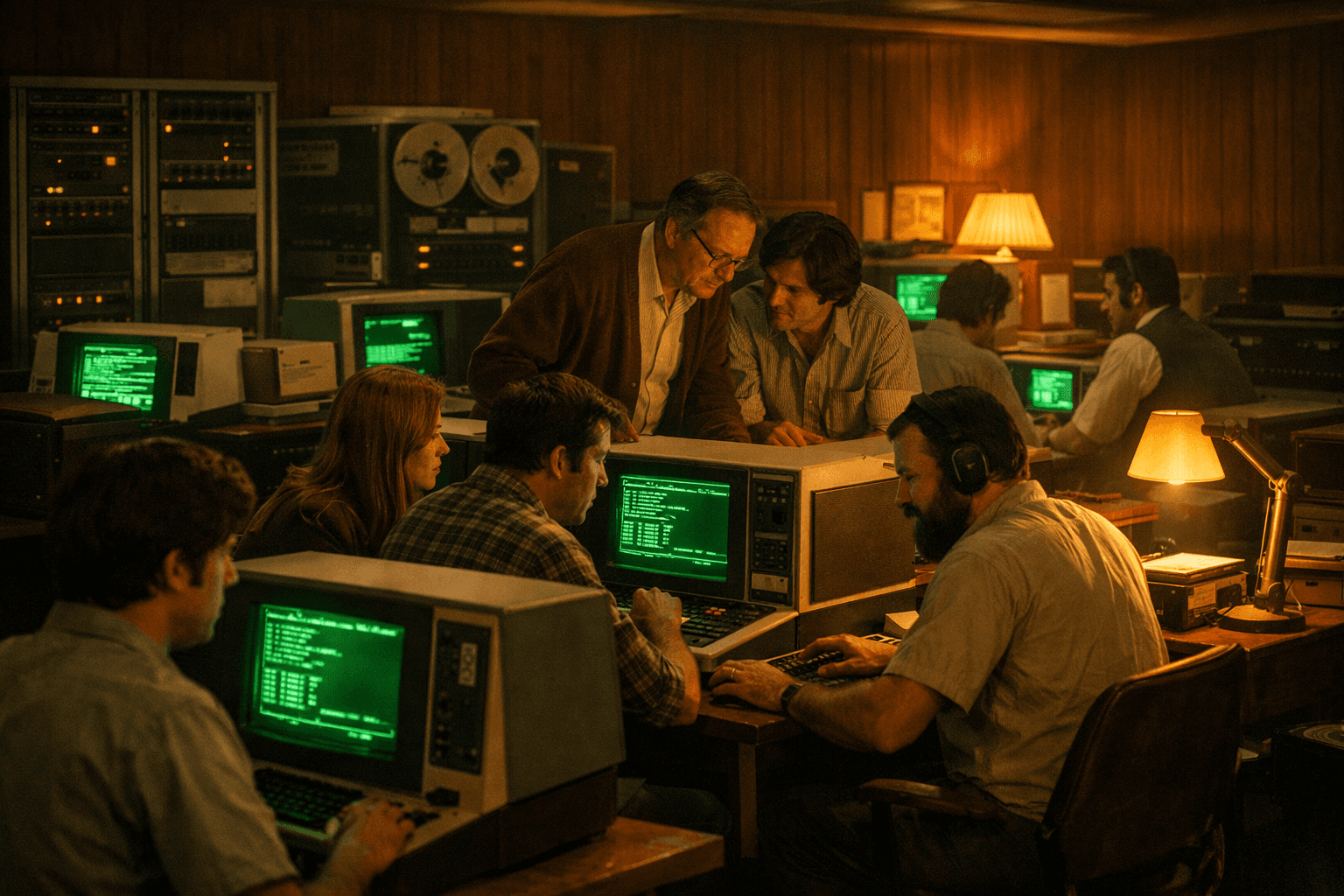
1970s
Minicomputers
Smaller, more accessible, but still institutional. Departments and labs got their own machines. The power started distributing — but the individual was still locked out.
2 / 6

1980s
Personal Computers
The revolution. Computing in every home, on every desk. Individuals owned their own machines, ran their own software, controlled their own data. The centralized model shattered.
3 / 6

2007+
Mobile
Computing in every pocket. More power in a phone than in the mainframes that started it all. Always connected, always personal, always with you. The most distributed computing has ever been.
4 / 6

2020s
Cloud AI
AI today mirrors the mainframe era. Centralized. Controlled by a handful of companies. Your data goes to their servers. They set the rules. They can change the terms, revoke access, or mine your information at any time.
5 / 6

Now
Sovereign AI
The next revolution. Every individual and every business with their own customized, local, hybrid AI system. Sovereign. Running on their own hardware. Trained on their own data. Governed by their own rules. We're building for this future now.
6 / 6
The Second Inversion
From governance-as-afterthought to governance-as-substrate.
The trajectory toward sovereignty is the easy story. The second inversion is harder, and almost nobody is building for it: AI must shift from governance bolted on after the fact to governance built into the operating substrate itself.
Today's AI safety story is bolt-on. Training-time tuning. Constitutional principles in system prompts. Output filters at inference. Compliance dashboards reviewed quarterly. Each one a guardrail — a layer above an architecture that was not designed around it. When guardrails fail, they fail invisibly.
Substrate governance runs before, during, and after every action. Consent tiers, audit receipts, negative constraints, memory firewalls, truthfulness gates — built into how the operating system itself runs. That is the architecture sovereign AI actually needs. Without it, a powerful local AI is just an unaccountable assistant.
How governance worksWhy local-first matters.
Privacy. Your data stays on your hardware. No cloud provider sees it, stores it, or trains on it. Your conversations, your documents, your decisions — they belong to you.
Control. You set the rules. You define the boundaries. You decide what the system can and cannot do. No one changes the terms of service on you. No one revokes access.
Reliability. Your system works whether the internet is up or down. No outages because a cloud provider is having a bad day. No degraded service because demand is high.
Independence. Your AI doesn't belong to OpenAI, Google, or Anthropic. It belongs to you. That's not a philosophical statement — it's an architectural one.
Why hybrid matters.
Local-first doesn't mean local-only. The most capable AI systems use local models for sovereignty and speed, cloud models for capability when needed — all under governance that controls what goes where. Your sensitive data never leaves your hardware. Cloud resources are used surgically, with full audit trails, under rules you define.
Sovereign AI is the trajectory. Governance is the substrate. Building for one without the other is the same as not building either. Netminder42 builds for both.